
E-Commerce
The Big 4 Support Questions: How E-Commerce Stores Automate 70% of Customer Messages

Ajay Singhadiya, Founder, OperateAI
11 min readUpdated
On this page · 7 sections
- 01The "Where Is My Order?" Endless Loop
- 02The Big 4: Why Most of Your Support Is Four Questions
- 03How the Automated Support Engine Works
- 04The Guardrail: The AI Reads Your Data, It Never Decides Policy
- 05The India Layer: COD, RTO, and the Flow Nobody Automates
- 06One Date to Plan For: October 1, 2026
- 07What It Costs, and Where It Breaks
E-commerce customer support automation connects your store (Shopify, WooCommerce) and your courier (Shiprocket, Delhivery, FedEx) to an AI messaging workflow. When a customer asks where their order is, how to start a return, or whether a size is back in stock, the system reads the live order record and answers in seconds on WhatsApp, Instagram, or web chat.
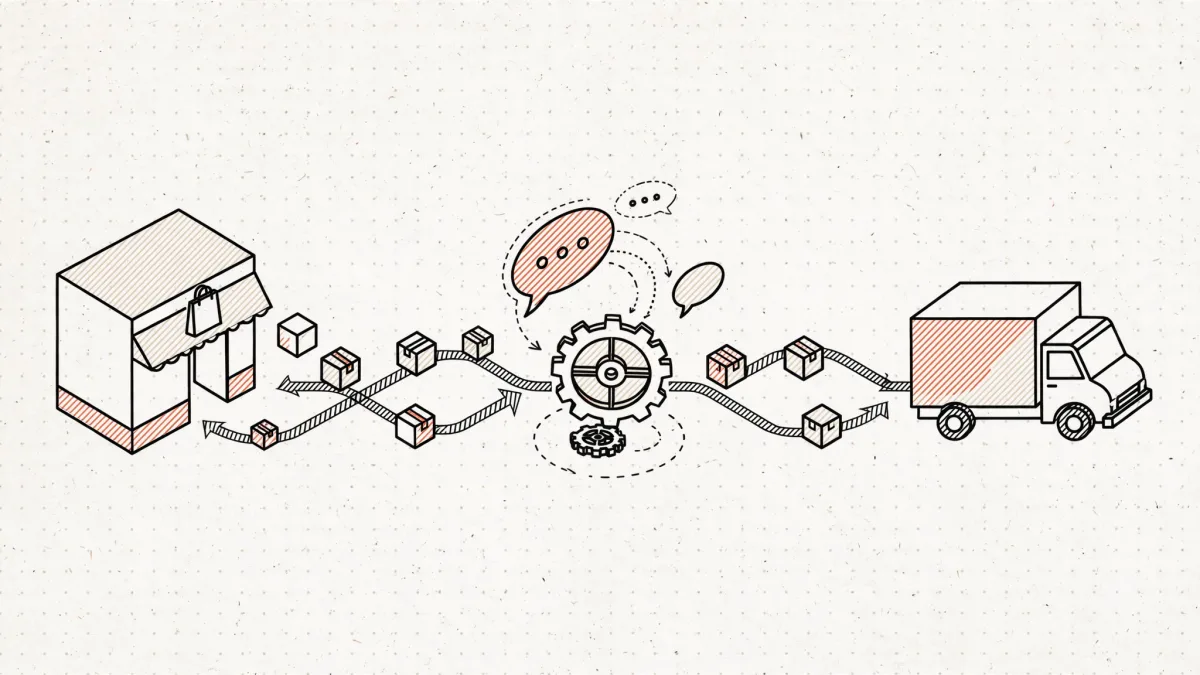
The "Where Is My Order?" Endless Loop
You sit down ready to work on the new launch. Then you open your inbox, your WhatsApp Business app, and your Instagram DMs. Forty messages are waiting.
- "Hi, where is my package?"
- "Can I exchange my shirt for a larger size?"
- "I typed the wrong flat number, can you fix my address?"
None are hard. Every one has a factual answer sitting in your shipping dashboard or inventory sheet. Yet you burn 2 to 4 hours a day copying tracking numbers, opening courier portals, and retyping the same polite reply.

Industry benchmarks published in 2026 put a human-handled support ticket at $6.00 to $13.50 once you count wages, tooling, and supervision. An AI-resolved ticket lands between $0.50 and $2.00. At 900 messages a month, that is the difference between a part-time hire and a line item you barely notice.
The Big 4: Why Most of Your Support Is Four Questions
Tag a week of tickets and it collapses into four buckets.
1. WISMO, "where is my order". The biggest by a distance. Decagon's WISMO benchmarks put it at 25–40% of inbound e-commerce support volume, rising to 50–60% during festive peaks.
2. Returns and exchanges. Policy windows, pickup scheduling, exchange sizes, refund timing.
3. Product and stock checks. Sizing, ingredients, compatibility, restock dates. These arrive before the sale, so a slow answer is directly expensive.
4. Address and order edits. A wrong flat number, caught after checkout.
Those four are the large majority of your inbox, and they share the one property that makes them automatable: the answer already exists as structured data in your stack. Nobody is asking for a judgement call. Somebody is asking you to go and look.
How the Automated Support Engine Works
We run these on self-hosted n8n, so order data and phone numbers stay on infrastructure the client owns.
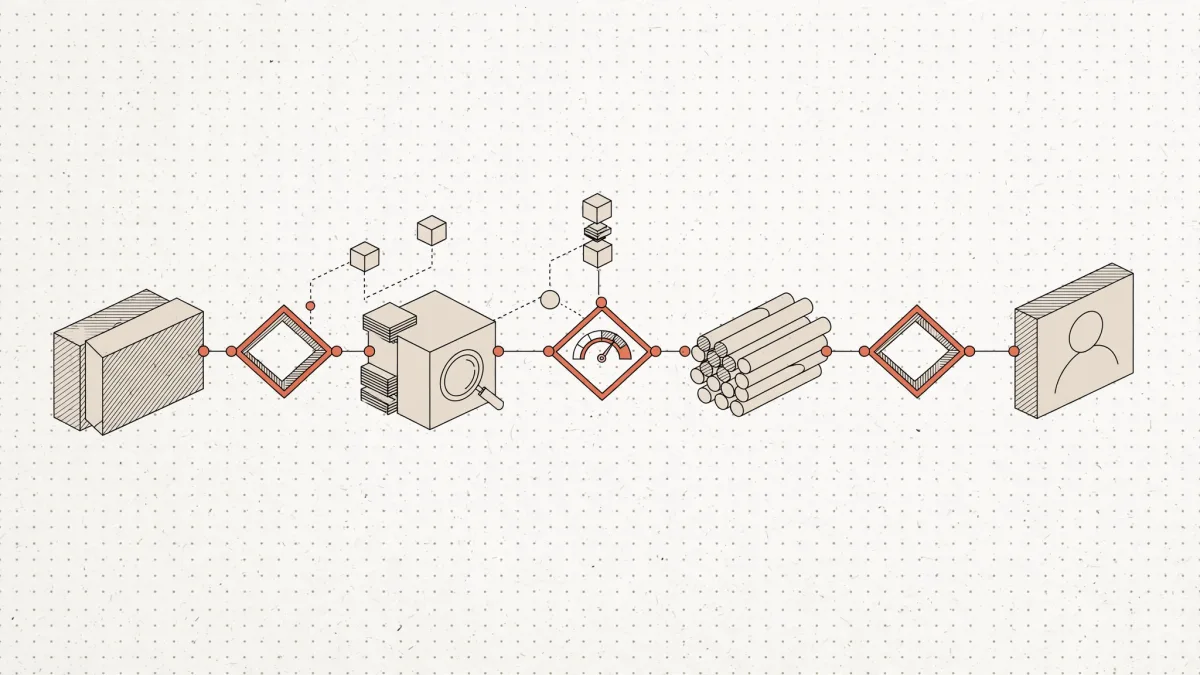
[Message in: WhatsApp / Instagram DM / website chat]
      │
      ▼
[1. Classify: WISMO | Return | Stock | Edit | Other]
      ├── "Other" ────────────► [Human queue]
      ▼
[2. Match order: phone number → latest order]
      ├── no match ───────────► [Ask once, then human]
      ▼
[3. Read Shopify/Woo order + courier tracking event]
      ▼
[4. Draft reply from that data only]
      ▼
[5. Confidence gate] ──(low)─► [Human queue]
      ▼
[6. Send. Log thread. Update ticket.]
Two design choices matter more than the model you pick.
Identify the order from the phone number, not the customer. Asking "please share your order ID" is where most chatbots lose people, because most customers do not have it handy. Look up the latest order against the number they are messaging from, confirm it back in the reply, and the friction disappears.
Take courier data from webhooks, not polling. Shiprocket and most aggregators push a tracking event the moment a package scans, so your answer is current the second the customer asks. Polling a courier API on a timer is slower, more brittle, and gets you rate-limited on the one day you cannot afford it.
The Guardrail: The AI Reads Your Data, It Never Decides Policy
In February 2024, Canada's British Columbia Civil Resolution Tribunal ordered Air Canada to compensate a passenger given a bereavement fare policy that did not exist. Its chatbot had invented it. The airline argued it was not responsible for what its own chatbot said. The tribunal disagreed.
That ruling states the rule every store needs: whatever your automation says, you said. The boundary is not how smart the model is. It is what the model is allowed to touch.
Automate the lookup. Tracking status, delivery estimate, return window dates, stock level, order contents. Facts pulled from a system of record and repeated back. If the data is right, the answer is right.
Never automate the exception. Refunds outside policy, goodwill discounts, replacement approvals, damaged items. Those go to a person with the thread attached, because the model has no business making a commitment your finance sheet has to honour.
In workflow terms: the AI can send information, it cannot send a promise. Anything creating an obligation routes to a human. More on skipped boundaries in why 90% of B2B AI automations break in month 2.
The India Layer: COD, RTO, and the Flow Nobody Automates
If you sell in India, the highest-ROI automation in this post is not WISMO. It is the cash-on-delivery confirmation, and almost nobody builds it.
Shipway's FY25 analysis, carried by Amazon Shipping India, found that about 26% of COD orders come back as RTO (return to origin), against under 2% for prepaid orders. Each one costs forward shipping plus return shipping plus handling, on an order that earned nothing.
So: a COD order is placed. Within minutes, before it is packed, the customer gets a WhatsApp message confirming the item, the amount payable, and the address, with two buttons, confirm or cancel. Address wrong? They fix it while fixing it is free. Second thoughts? You find out now, not after the courier has driven there twice. Add a prepaid nudge with a small discount and the riskiest orders start becoming the safest.
Two more India-specific requirements: handle Hinglish, because customers type "bhai order kab aayega" far more often than clean English, and connect the aggregator, not the individual courier, so one integration covers Delhivery, Blue Dart, and Ekart.
We built a WhatsApp agent reading photos, voice notes, and PDFs for a Jaipur grocery shop, written up here. For a Jaipur footwear retailer, a 9-second agent took serious buying conversations from 10–15 a day to 60–70 on unchanged ad spend, in the full case study.
One Date to Plan For: October 1, 2026
From November 2024 to September 2026, free-form replies sent inside WhatsApp's 24-hour customer service window cost nothing. You could answer a customer who messaged you first, as often as you liked, for free. That is a large part of why WhatsApp support was cheap to run.
That ended on 1 October 2026. Meta's pricing page now charges for each reply after the first 1,000 a month per business phone number, at ₹0.115 per message for customers in India. Utility templates sent inside the window, like order updates, are charged at the same rate with no free tier.
The rate is small. The point is not the sticker price, it is that your support volume has a line item it did not have before. A store answering 10,000 messages a month pays for 9,000 of them, about ₹1,035. A store that deflects the Big 4 automatically sends far fewer replies, and those are the conversations worth having. Our WhatsApp API pricing guide shows how to work out your own bill.
What It Costs, and Where It Breaks
Honest numbers for a store handling a few hundred to a couple of thousand messages a month:
| Line item | One-time | Monthly (INR) | Monthly (USD) |
|---|---|---|---|
| Self-hosted n8n on a small VPS | ₹0 | ₹500–₹1,500 | $6–$18 |
| AI API calls | ₹0 | ₹400–₹2,000 | $5–$24 |
| WhatsApp charges (from Oct 2026) | ₹0 | ₹0.115/reply after 1,000 | by country |
| Build: integrations, flows, handover | ₹45,000–₹1,20,000 | ₹0 | one-time |
| Optional managed upkeep | ₹0 | ₹8,000–₹12,000 | $95–$145 |
Now the ceiling. AI handles 55–70% of tier-1 tickets well, and agentic setups reach 70–80% on a typical e-commerce ticket mix. Anyone quoting 95% is selling. Plan for a quarter of your volume to need a person, and design the handover to read as one conversation.
Three rules we enforce on every build:
- One clean exit to a human, always available, carrying the full thread across.
- Log every message before processing it. If an API times out or the server restarts, you replay from the log instead of losing the question.
- Say what it is. A short "you're chatting with our automated assistant" prevents the frustration that makes people screenshot your bot.
Losing hours a day to tracking links and return questions? You do not need an enterprise helpdesk. You need one workflow wired to the data you already have. We build, test, and hand these over in 1 to 2 weeks, on your infrastructure, documented. See WhatsApp AI Agent or book a free 30-minute AI audit.
FAQ
Q: Does this only work with Shopify? No. Shopify is easiest because its order API is clean and well documented, but the same build works on WooCommerce, Magento, a custom store, or a Google Sheet. What matters is that order status is readable programmatically. If your orders only exist in someone's head, fix that first.
Q: Will customers realise they are talking to a bot? Some will, and that is fine. What annoys people is automation that wastes their time or pretends to be human and then fails. Say up front that it is an assistant, answer in one message with the real tracking link, and offer a human exit. Most prefer that to waiting until morning.
Q: What if the courier's own tracking data is wrong or stuck? It happens, especially with delayed scans. If the last tracking event is older than 48 hours, do not send a confident delivery estimate. Say the shipment has not scanned since that date, that you are checking with the courier, and route it to a human. A wrong promise creates a second, angrier ticket.
Q: Can it process returns and refunds automatically? It can start a return: read the policy window, check eligibility, raise the pickup request, confirm to the customer. Issuing money is different. Refund approval stays with a human, or behind an amount threshold. The automation prepares the decision, a person releases the cash.
Q: Does this work on Instagram DMs too, or only WhatsApp? Both, plus website chat and email, through one workflow. Instagram messaging runs on Meta's Messenger API for Instagram and needs a professional account linked to a Facebook Page. Most Indian and Gulf stores see the bulk of volume on WhatsApp, so we launch there first.
Want help putting this to work?
Book a free 30-minute AI audit. We'll show you exactly what to automate and in what order.
Get Your Automation Plan
Keep reading
All articlesWhatsApp API Pricing 2026: What Replies Now Cost
Oct 4, 2026 · 11 min readAutomationAI Agent vs Automation Workflow: Which Does Your Small Business Actually Need?
Sep 27, 2026 · 12 min readAutomationThe Safe AI Framework: How Small Businesses Automate Daily Tasks Without Costly Mistakes
Sep 20, 2026 · 10 min read